






Hit by a Semi-Truck in PA or NJ?
The unthinkable has happened, and you’ve been in an accident with a tractor-trailer (18-wheeler). Getting hit by a semi-truck can be a traumatic and scary experience that results in serious property damage and the potential for severe injuries, including traumatic brain injury, spinal cord injury, broken bones, burn injuries, and even fatalities. Learn more about getting hit by a semi truck and what may happen in the aftermath.
Why Is Getting Hit By A Semi-Truck Different From A Car Accident?
Accidents involving cars and smaller trucks can be dangerous on their own, but when a semi-truck is involved, the situation becomes significantly more hazardous due to the sheer size and weight of the vehicle. A commercial tractor-trailer weighing up to 80,000 pounds increases the potential danger of what might have been a minor collision with smaller vehicles. Additionally, tractor-trailers are often loaded with cargo that not only adds weight to the vehicle but may also include hazardous materials, further increasing the risks of catastrophic injuries such as paralysis or amputation.
Another factor that complicates semi-truck accidents is the issue of liability. Commercial vehicle liability can extend beyond just the driver, depending on the circumstances of the crash. Various parties could be held liable for the accident, and the laws that govern commercial trucks are often different from those for passenger vehicles, with specific state and federal regulations, including FMCSA and DOT hours of service requirements, in place. In these cases, multiple agencies may be involved in the investigation, and several legal jurisdictions could come into play, making accidents involving semi-trucks more complex to navigate. Common causes include distracted driving, mechanical failure, brake failure, tire blowout, inadequate training, and poor maintenance of the big rig.
Wondering What To Do After Getting Hit By A Semi Truck?
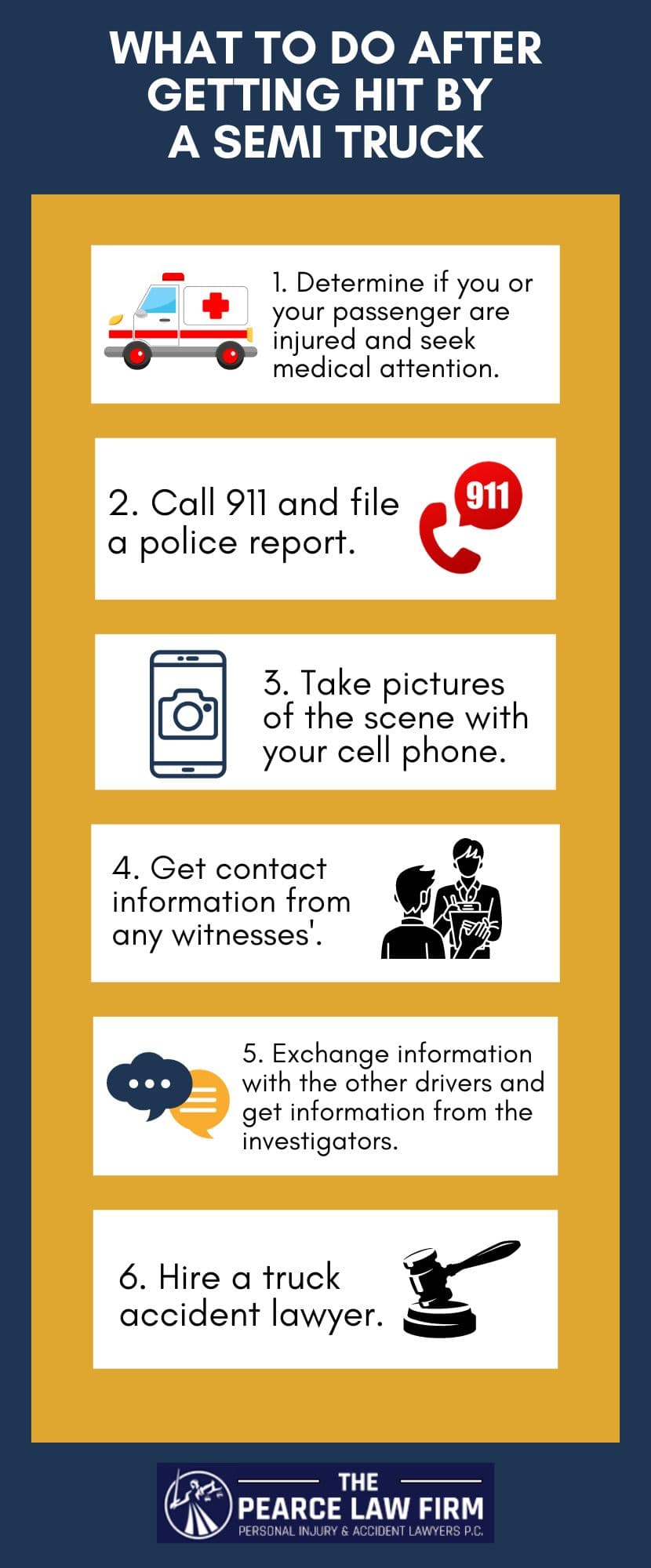
After being involved in an accident, especially one where you may be in shock, it’s important to try to follow these steps if you can do so safely. Here’s what you should do immediately after being hit by a semi-truck:
First, check yourself and any passengers for injuries. Once you’ve assessed the situation, you should contact the police to report the accident, as required by Pennsylvania law when at least one vehicle is undrivable or there is an injury or fatality. If you’re aware of any injuries, request an ambulance as soon as possible.
Once the emergency steps are taken, it’s helpful to begin gathering evidence, but only if you can do so safely. Here are some actions that can assist in your case:
-
Take photographs of the accident scene with your phone, including images of your vehicle, the other vehicles involved, and any visible damage. Be sure to capture their license plates, as well as the surrounding environment, such as the roadway, nearby traffic signs or signals, and the weather conditions. If possible, photograph the truck’s black box or EDR (Event Data Recorder) location, DOT number, and any visible signs of mechanical failure or tire blowout.
-
If there are any witnesses, make sure to get their information, including their name, phone number, and address, before they leave the scene. Witness testimony can prove negligence and establish liability in your lawsuit.
-
Exchange information with the other drivers involved in the accident. Collect their names, driver’s license details, addresses, phone numbers, trucking company information, and insurance details. If you’re uncomfortable doing this, the police can help facilitate the exchange.
-
Lastly, make sure to get the details of the investigators on the scene. Record their names, badge numbers, contact information, and the agencies they represent. This information will be useful for obtaining the Commonwealth of Pennsylvania Police Crash Reporting Form (AA 500) and the official accident report for your claim.
Taking these steps can help ensure that you have the necessary evidence and details for any legal or insurance claim processes.
What Not to Do After Getting Hit By A Semi Truck or Hit by an 18-Wheeler
After an accident, there are several things you should avoid doing to protect your rights and ensure the best possible outcome.
First, avoid discussing the accident with the other drivers involved or admitting fault. Any statements you make could potentially be used against you when determining liability, so it’s important to stay cautious in your conversations. Never provide a recorded statement to the insurance company without consulting an attorney first, as claims adjusters may use insurance company tactics to minimize your settlement.
You might feel fine right after the accident and think that seeing a medical professional isn’t necessary, but this can be a mistake. Your body is often flooded with adrenaline and other stress hormones following an accident, which can mask the pain of injuries. Additionally, internal injuries, like internal bleeding, may not be immediately apparent. It’s crucial to see a doctor as soon as possible to rule out any serious conditions and to address any potential health concerns. Following the initial evaluation, be sure to follow up with your regular healthcare provider. Some injuries, such as whiplash, may not become apparent until later. Permanent disability, life-altering injuries, and emotional distress can significantly impact your quality of life and lost earning capacity. Having medical records and medical documentation is essential for supporting any future claims related to the accident.
Lastly, it’s a good idea to consult with a qualified and skilled truck accident lawyer before accepting any initial offers from the insurance company or other parties involved in your accident. Insurance companies often make lowball offers that don’t cover rehabilitation costs, out-of-pocket costs, or the full extent of your economic damages and non-economic damages. A lawyer can help you understand your legal options and ensure that you are not accepting less than what you may be entitled to.
Determining Fault in a Semi-Truck Accident
Liability in semi-truck accidents can be complicated, especially when multiple parties are involved, such as various companies connected to the semi-truck. In these cases, more than one party may be found at fault. The truck driver, the trucking company, the company that owns the truck, the one responsible for loading the trailer, the maintenance company, and potentially others could all share responsibility for the accident.
For example, if the commercial truck driver involved in your accident fell asleep at the wheel, the company that employed him could be liable for not properly reviewing his trucking logs to ensure he was getting enough rest. If the driver had a history of speeding or careless driving violations, and the company was aware of these issues but did not take action, they could also be held responsible. If the driver had been drinking, and the company continued to employ him despite knowing about his history of drunk driving, they too could be at fault. Additionally, if the truck was loaded improperly, causing it to jackknife, the company responsible for the loading could share liability as well. Other scenarios include reckless or negligent behavior, such as an overloaded truck with unsecured cargo, wide turns causing sideswipe or T-bone accidents, rear-end collisions due to inadequate stopping distance, head-on collisions, underride accidents, or rollover risk from blind spot errors.
In such situations, multiple parties could be held accountable for the accident, and determining who is at fault can be a complex process. This is why having a dedicated and compassionate lawyer experienced in handling semi-truck accident cases can be incredibly beneficial. An aggressive attorney who represents accident victims will investigate the truck wreck, file a lawsuit if necessary, negotiate a fair settlement, and pursue maximum compensation on your behalf. A lawyer familiar with these types of complicated cases can help navigate the intricacies of liability and ensure that all responsible parties are held accountable. Expert witnesses can analyze the accident and provide testimony to establish negligence and prove your case in court if litigation becomes necessary.
What Compensation Could I Be Due After A Commercial Truck Accident?
After your accident, expenses can quickly accumulate, from repairing or replacing your vehicle to covering medical costs. You may be eligible for compensation for several types of damages through your truck accident claim, including:
- Medical bills, both current and future
- Lost wages and lost earnings capacity
- Property damage
- Pain and suffering
- Future inability to work
- Mental anguish and emotional distress
- Scarring and disfigurement
- Rehabilitation costs and out-of-pocket costs
- Economic damages, non-economic damages, and, in cases of extreme negligence, punitive damages
- Wrongful death compensation for family members in fatal truck accidents
- And more
Determining the value of your claim can be challenging, but consulting with a lawyer can help you assess its worth. Understanding the statute of limitations, settlement timeline, and how long the insurance claim process takes are important searcher considerations when pursuing your claim. Whether you need a local and trusted personal injury lawyer in Doylestown, a car accident lawyer in Philadelphia, or a truck accident lawyer in Cherry Hill, NJ, we are here to assist you. We offer a free consultation with no upfront fees and work on a contingency fee basis. No win no fee. Reach out to us today!
If you’ve been injured or collided with a semi-truck in Pennsylvania or an 18-wheeler accident in New Jersey, it’s crucial to speak with a reputable and highly rated truck accident lawyer who specializes in these complex cases. Our client-focused firm protects client rights and will litigate your case to maximize your recovery and compensate you fully for your suffering. Contact The Pearce Law Firm, Personal Injury and Accident Lawyers, P.C., today for a no-obligation FREE consultation to explore your legal options and discuss your potential claim.

