






Philadelphia Uber Rideshare Accident Lawyer Near You
If you have been injured in a wreck and an Uber vehicle was involved, contact us today for a free and confidential consultation. We have helped many drivers, passengers, pedestrians, and other victims of automobile accidents obtain compensation for injuries sustained involving rideshare vehicles. Philadelphia car accident lawyer Edith Pearce, the founder of The Pearce Law Firm, has extensive experience in the auto insurance business, as she worked as an attorney for years for a major auto insurance company and a defense accident law firm, giving her unique insight into insurance company tactics and how to maximize compensation for injured victims.
Contact Us for Free Consultation »
Uber Accident Victim?Call Us 24/7 – (215) 557-8686 or Email Us Here |
 |

What is Uber According to PA Law?
Uber is what’s known as a transportation network company, or a ridesharing service. Customers download Uber’s app on their cell phones along with personal and credit card information. If they need transportation to a destination, they merely contact Uber through the app, and a driver in or around their neighborhood picks them up and drives them to their destination. Before the ride begins, the app shows the passenger the driver’s photo, the vehicle’s make and model, and the license plate number so the passenger can confirm they are getting into the right car. Other than maybe a tip, no cash changes hands. It’s an incredibly convenient service, especially if your car is parked in a parking garage and you just need a short trip around town, you don’t have a vehicle, you plan on drinking alcohol, or if you’ve just flown in to Philadelphia International Airport (PHL) and don’t want to rent a car.
There are several car options in and around Philadelphia and New Jersey to pick when choosing to ride on Uber listed below, generally from least to most expensive:
- UberX: Most basic Uber Service comparable to a taxi, allowing up to 4 passengers in your party
- UberX Share: Share ride with up to 1 other passenger (formerly, “UberPOOL”)
- UberX Saver: Lower prices if you’re willing to wait a longer time to be picked up
- UberXL: Basic Uber service with larger vehicle requiring SUV or Minivan that can take up to 6 passengers
- Uber Comfort: Newer cars with extra legroom
- Uber Black: Ride in style with Uber Black. This service is used often for business or for that special ride. It is the most expensive option and requires a black luxury vehicle. Uber Black drivers operate as commercial livery drivers, which generally means commercial registration and a commercial livery insurance policy, so there may be additional coverage available if you are injured in a crash. Drivers must also maintain a high rider rating to qualify.
- Uber Black SUV: Luxury SUVs for up to 6 passengers
- Uber WAV: Rides in wheelchair accessible vehicles
- Uber Green: Rides in electric vehicles
- Uber Intercity: Ride from one city to another
- Uber Eats: Delivery service
Potential Auto Insurance Issues With Uber Accidents Near Philadelphia
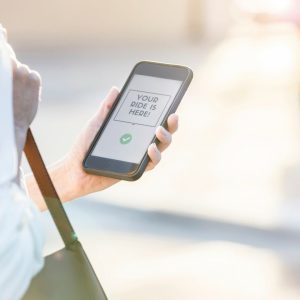 Whether you’re a passenger or a third party like a pedestrian or bicyclist who has been injured in an accident involving an Uber vehicle, there’s likely to be insurance to cover your injuries. What might come to issue is when different insurers start standing around pointing their fingers at each other. Which insurer might be on the hook for damages depends on what the Uber driver was doing at the time of the accident. Having a skilled rideshare accident lawyer on your side is critical when the finger pointing begins.
The rideshare industry usually describes a driver’s activity in three “periods.” Pennsylvania law does not use that language. For rideshare accidents in Philadelphia, the governing statute is 53 Pa.C.S. § 57A07, enacted as part of Act 164 of 2016, and it sets only two coverage tiers. The lower tier applies while the driver is logged onto the app but is not engaged in a prearranged ride. The higher tier applies while the driver is engaged in a prearranged ride, which begins the moment the driver accepts a request and continues until the last passenger leaves the vehicle. Under Pennsylvania law, then, driving to the pickup and driving the passenger to their destination fall in the same tier. Here is how the three commonly described steps map onto the statute.
Step #1: Uber App OFF
During this time period, the Uber driver has their Uber App turned off and is not actively receiving passenger requests. During this stage, Uber considers the driver’s vehicle as being used for personal purposes because the Uber App is not active. Since Uber does not own the car, the driver’s personal auto insurance is in effect and Uber will not provide additional insurance. This means the Uber driver may only have the minimum amount of insurance required by state law. In Pennsylvania, the state minimum only requires $15,000 of coverage for bodily injury per person and $30,000 per accident. New Jersey’s minimum “basic insurance policy” may be even less, creating a significant coverage gap for crash victims.
Step #2: Uber App is ON with no ride accepted
Now the Uber driver has logged into the company’s app and is actively available to transport passengers, but has not yet accepted a ride request. Under 53 Pa.C.S. § 57A07(b), the coverage required in this window is primary, not contingent:
- $50,000 for death and bodily injury per person, $100,000 per incident, and $25,000 for property damage
- First-party medical benefits under 75 Pa.C.S. § 1711, including $25,000 for pedestrians and $5,000 for the driver
A great deal of published information gets this wrong, and the distinction affects real money. Because Pennsylvania requires this coverage to be primary, an injured person generally does not have to exhaust the driver’s personal policy and prove it fell short before the rideshare coverage responds. Section 57A07(e) goes further. If the driver’s own coverage has lapsed or does not meet the statutory requirement, the insurance maintained by the transportation network company must provide the required coverage beginning with the first dollar of a claim.
Act 164 also expressly permits personal auto insurers to exclude coverage entirely while a driver is logged onto a rideshare app, so the driver’s personal policy has often already excluded the loss anyway. What remains true is that these limits can prove badly insufficient for a catastrophic injury, and that is the real coverage gap in this window.
Step #3: Ride Accepted Through Drop-Off
Once the Uber driver accepts a ride request, the driver is engaged in a prearranged ride under Pennsylvania law. That status continues while the driver travels to the pickup location and while the passenger is being transported, until the last passenger exits the vehicle. Two different numbers apply here, and you should understand both:
- The statutory floor. 53 Pa.C.S. § 57A07(c) requires primary automobile liability insurance providing at least $500,000 for death, bodily injury and property damage, plus first-party medical benefits of $25,000 for passengers and pedestrians and $5,000 for the driver.
- What Uber actually carries. Uber and Lyft voluntarily maintain $1 million in third-party liability during a prearranged ride, along with $1 million in uninsured and underinsured motorist coverage. That UM/UIM coverage comes from company policy and not from a Pennsylvania statutory mandate, which is one reason the actual policy in effect on the date of your crash needs to be obtained and reviewed.
Once the passenger is dropped off, coverage steps back down to the app-on tier described in Step #2 if the driver remains logged onto the app, or to the driver’s personal policy if the driver logs off.
Why the Timing of a Cancelled Ride Can Change Your Case
The gap between $50,000 and $1 million is enormous, and it turns entirely on the driver’s status at the moment of impact. That is where insurers focus their attention.
A common scenario looks like this. An Uber driver accepts a request, speeds toward the pickup location, and causes a crash. Because the driver cannot complete the trip, the passenger cancels. From the trip data alone it can be difficult to tell whether the cancellation came before or after the collision, and an insurer has every incentive to argue it came first, which would drop the claim into the lower tier.
Pennsylvania’s definition of a prearranged ride describes it as ending when the last passenger departs from the vehicle. The statute does not expressly say that a cancellation ends a prearranged ride. That leaves the insurer’s position open to challenge instead of settled, and it is a point we press.
Evidence is what resolves these disputes, and the law gives you two starting points:
- Under 53 Pa.C.S. § 57A07(j), the driver must disclose to directly interested parties, automobile insurers, and investigating police officers whether the driver was logged onto the digital network or on a prearranged ride at the time of an accident.
- In a claims coverage investigation, the transportation network company and any insurer potentially providing coverage must cooperate in exchanging relevant information, including the precise times the driver logged on and off the digital network in the 12 hours before and the 12 hours after the accident, along with a clear description of the coverage, exclusions and limits.
Those disclosures answer whether the app was on. They do not by themselves reveal the exact moment a ride was accepted or cancelled. Getting the trip-level data usually requires a preservation demand and, if necessary, formal discovery. That is why getting a lawyer involved early can make a substantial difference in what coverage is ultimately available to you.
Pennsylvania’s Limited Tort Election and Your Uber Claim
One Pennsylvania rule deserves your attention before anything else, and that is the tort option you selected on your own auto policy. Under 75 Pa.C.S. § 1705, drivers who choose limited tort pay a lower premium but generally give up the right to recover for pain and suffering and other non-economic damages unless an exception applies. Drivers who choose full tort keep that right.
This threshold question shapes every Pennsylvania bodily injury claim, and how it applies to rideshare crashes involves wrinkles that deserve review with an attorney. Section 1705 contains several exceptions, including ones for serious injury and for injuries sustained while an occupant of certain vehicles that are not private passenger motor vehicles. If you believe you elected limited tort, that is not a reason to skip a consultation. It is a reason to have one.
Insurance Statements and Medical Authorizations
After being injured in an accident, one or more insurance adjusters might contact you wanting signed medical authorizations and recorded statements from you. It is often in your best interest to tell them you want to check with your lawyer first, and then call us. While your own automobile insurance may require you to provide a recorded statement, you generally do not need to give the other insurance company a recorded statement. You are generally under no legal obligation to provide either a statement or a medical authorization to an opposing insurer, and you could hurt your case by doing so. This is important, as opposing insurers will likely try to use your statement or past medical history against you in the future to minimize or deny your insurance claim.
What to Do if You Are in a Car Accident With Uber in Philadelphia
In November 2016, Governor Wolf signed Act 164 of 2016, the legislation that officially authorized Uber and other transportation network companies to operate in Philadelphia under the oversight of the Philadelphia Parking Authority. Since then, ridesharing services such as Uber and Lyft have continued to expand, while traditional taxicab use has steadily declined.
The standards to become an Uber driver are not very strict. Applicants generally only need to pass a basic background check, maintain a clean motor vehicle record with no more than three violations in the past three years, and have no history of DUIs or reckless driving citations. With thousands of new Uber drivers entering the streets of Philadelphia, it is no surprise that the number of Uber-related accidents continues to rise.
At the scene, ask the driver directly whether the app was on and whether they were on a prearranged ride, then write down the answer. Pennsylvania law requires the driver to disclose that information to you, to insurers, and to responding officers, and the answer determines which layer of coverage applies to your injuries.
According to Edith Pearce, a well-known car accident lawyer in Philadelphia, passengers riding in an Uber vehicle are usually protected by Uber’s $1 million insurance policy. This coverage helps pay for medical expenses, lost wages, and other damages including rehabilitation costs and permanent injuries. Lyft offers a similar $1 million insurance policy for its passengers, which is often more extensive than what many taxicab companies provide in Philadelphia.
But what happens if an Uber driver hits your car, strikes you as a pedestrian, or causes injury while not carrying a passenger? Liability in Uber accidents often depends on the driver’s status at the time of the crash:
- If the Uber driver was transporting a passenger, the driver was engaged in a prearranged ride and Uber’s $1 million liability coverage generally applies.
- If the driver had accepted a ride request and was on the way to pick the passenger up, Pennsylvania treats this the same as carrying a passenger. The $1 million policy generally applies here too. Do not let an adjuster tell you otherwise.
- If the Uber app was on but the driver had not accepted a ride, the required coverage is $50,000 per person and $100,000 per accident in primary liability, plus $25,000 in first-party medical benefits for an injured pedestrian. Because this coverage is primary under 53 Pa.C.S. § 57A07(b), you generally do not have to exhaust the driver’s personal policy first, and if the driver’s own coverage lapsed, the rideshare company’s insurer pays from the first dollar.
- If the app was off entirely, only the driver’s personal policy applies, and Pennsylvania’s minimum is just $15,000 per person. Your own underinsured motorist coverage may become the most important source of recovery.
Recovering compensation after an Uber accident can be complex. Questions of liability often arise, especially when multiple insurers are involved. Victims may face challenges proving negligence, negotiating settlements, or securing adequate compensation for medical bills, lost income, and pain and suffering.
That’s why you need an experienced Uber accident lawyer in Philadelphia who works on a contingency basis, someone who understands rideshare regulations, automobile insurance policies, and the tactics used by insurance companies. Edith Pearce, founder of The Pearce Law Firm, brings decades of legal experience. Before representing injured victims, she worked for an automobile insurance company and a defense accident law firm, giving her unique insight into how insurers handle claims and how to maximize your settlement.
If you or a loved one has been injured in an Uber or Lyft accident, don’t try to handle the claim alone. Contact The Pearce Law Firm today at (215) 557-8686 for a free consultation with same-day availability. An experienced, dedicated, and compassionate rideshare accident attorney can help you navigate the claims process, protect your rights, and pursue the full compensation you deserve.
Should I Represent Myself in a Case Against an Uber Driver?
We always recommend consulting with a rideshare accident lawyer when involved in an accident with an Uber vehicle. With at least two insurance companies being involved after a passenger or third person is injured in an Uber accident, the possibility of the insurers doing nothing and pointing their respective fingers at each other is likely, and increases with each added insurer. Remember, the insurance company has lawyers working for them around the clock in an attempt to limit the amount of money they pay out. Coverage could even be denied by all of the insurers. That’s more likely to happen if you try to represent yourself in an Uber injury claim. A qualified rideshare accident lawyer will look out for your best interests instead of the interests of the insurance companies and will advocate aggressively to settle or litigate your case for maximum compensation.
What If I am Injured in a Philly Uber Accident as a Tourist?
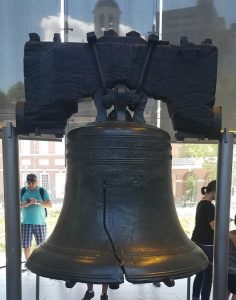 Philadelphia draws tens of millions of visitors every year. People drive in and fly in to PHL from all over the world, then most make their way to Center City to unpack at their hotel room. Once unloaded, people hit the streets to explore. Tourists quickly discover that their two most convenient options are walking and taking Uber.
If you are new to Philly and/or new to Uber you will quickly find yourself hooked with the app. Just tap the Uber app and you can see the Uber drivers swarming all around you, never more than a half mile away. After a few rides, you’ll begin to wonder if every vehicle in Philly is actually an Uber. If you’re traveling with young kids, an UberXL will scoop everyone right up and transport them from Reading Terminal Market over to the Museum of Art, and before you know it you’re using Uber for anything over 5 blocks away. Tourists don’t even need street addresses, Uber quickly picks up on places such as the Liberty Bell or the Betsy Ross House or other business names such as those popular restaurants selling cheese steaks.
What Happens When You’re Injured by an Uber in Philadelphia?
If you are involved in an Uber accident in or near Philadelphia while visiting and a serious injury has occurred, you’re going to want to consult with an attorney who specializes in personal injury and is licensed to practice law in the state of Pennsylvania or New Jersey, depending on where the accident occurred. A local attorney will understand out-of-state visitor claims and tourist accident rights.
As a passenger in an Uber vehicle it is highly likely that your injuries were due to someone’s negligence. Unfortunately, in addition to the unexpected injury you are now faced with obtaining compensation for those injuries from insurers who wish to protect their bottom line and pay you as little as possible.
Something that often surprises out-of-state visitors is that Pennsylvania requires first-party medical benefits in both rideshare coverage tiers, including $25,000 for passengers and pedestrians. That is typically the first money available to pay medical bills, and it does not depend on proving who was at fault.
If the Uber driver caused the wreck or if the Uber vehicle was hit by another driver, it is in your best interest to give us a call for a free consultation with evening appointments and virtual consultation options available. While our services are not needed in each and every case, if needed and retained we will fight to obtain the maximum amount of compensation for you that you deserve on a contingency fee basis, meaning no upfront cost to you.
Uber Eats Accidents in Philadelphia
Philadelphia is a city with great restaurants. Imagine not having to get off your couch to sample some of the best dishes in Philly. That’s the idea behind food delivery services like Uber Eats. The food arrives on your doorstep, hot (hopefully), and ready to eat.
It seems like a deal that’s too good to be true. And for drivers on city streets, it’s not all good news. The next time you get behind the wheel, you may notice the extra drivers making a lot of starts and stops because they’re on the clock.
Uber Eats Philadelphia Accidents
There are fleets of delivery vehicles now contributing to congestion on city streets. With the increased number of vehicles on the road, along with Uber Eats drivers perhaps being preoccupied with their next delivery, the risks for every other driver keeps rising. A driver’s mistake can send a car into a crash and leave an innocent victim with serious injuries from rear-end collisions, T-bone accidents, or hit-and-run incidents.
In these cases, a claim may be available against the delivery driver and, depending on the facts, against Uber. Keep in mind that Uber classifies its drivers as independent contractors and not as employees, and it defends that classification vigorously. A claim against the company generally proceeds through its insurance coverage and through legal theories that have to be developed on the specific facts of the case. A Philadelphia accident attorney with The Pearce Law Firm can help identify every party that may be at fault and every policy that may respond, so that a victim’s hospital bills and recovery costs are covered, including property damage and rehabilitation costs.
Uber Eats and Postmates
Uber’s acquisition of the delivery company Postmates was announced in July 2020 and closed that December, and Postmates operations were later folded into Uber’s delivery business. For Philadelphia motorists, the practical effect has been more delivery vehicles making frequent stops on city streets.
Uber Eats Behind the Wheel Distractions
In Uber’s US Safety Report covering 2017 and 2018, the company reported 107 motor vehicle fatalities across 97 fatal crashes over those two years. Uber has published additional safety reports covering later periods, and the figures are updated periodically.
The Uber Eats risk comes down to more vehicles on the road with more drivers who may be distracted by their work, a form of distracted driving that causes vehicle accidents throughout Philadelphia. Those drivers may have their minds on some of the following:
- Customer Order-Up. The wait for the next customer. Multiple orders may come in at once. Some orders have special instructions. All distractions behind the wheel.
- Locating Destinations. The driver will need to find the restaurant to pick up the order and then figure out how to reach the customer’s location. Delivery drivers utilize GPS systems but even the guidance those devices provide has been known to suggest unsafe traffic decisions.
- Speeding to make their deadlines for delivery. Customers prefer their food to be warm.
- The food itself can become a factor if something spills or bags tumble.
- Drug or Alcohol use. Uber Eats has a zero-tolerance policy for drug and alcohol consumption, but delivery drivers have been charged with DUI before.
Philadelphia delivery drivers can be distracted by so many more things than a normal driver. Factor in that delivery drivers are on the clock and the streets are their office. Their goals can be completely different from motorists just trying to pick up their children from school.
Uber Eats Insurance Policy for Drivers
Food delivery raises a coverage question that catches many people off guard, which is that Pennsylvania’s rideshare insurance statute may not apply at all. Sections 57A07 and 2603.1 set coverage requirements around a “prearranged ride,” and the law defines that term as the transportation of a passenger. A food delivery carries no passenger. The statutory tiers described earlier on this page are therefore not necessarily the framework governing a delivery crash. Coverage instead turns on the terms of Uber’s own commercial policy, which is a contract and not a statutory minimum.
In general, Uber maintains a third-party liability policy of up to $1 million that applies from the moment a delivery driver accepts an order until the delivery is complete. That policy is intended to sit above the delivery driver’s own insurance. Be aware that Uber Eats drivers may be on the road waiting for the next order to come in, but until they accept an order the higher coverage has not attached. That gap can leave crash victims undercompensated, and it is why obtaining and reading the actual policy in effect on the date of the crash matters so much.
Seeking Compensation After an Accident In Philadelphia
In Pennsylvania, an injured person generally has two years from the date of the accident to file a personal injury lawsuit, under 42 Pa.C.S. § 5524. This statute of limitations is a critical deadline for protecting your legal rights. Shorter deadlines and formal notice requirements can apply to claims involving government entities such as SEPTA or the City of Philadelphia, so those cases need attention immediately.
The auto accident attorneys with The Pearce Law Firm don’t recommend waiting until the end of this deadline to file. If you intend to file a claim, the sooner the better. Evidence and documents you’ll need for your case against Uber Eats will be easier to collect immediately after an accident, and rideshare app data in particular should be demanded in writing early, before it ages out of routine retention. An attorney can help you with this important decision and advise you on what to do after the accident and what evidence you need to prove negligence.
If you do decide to file a claim against a delivery company you may be able to recover for some of your hardships that you hadn’t considered. You may be able to recover things like short and long term medical expenses, past and future lost earnings, costs for rehabilitation, and damages for emotional pain and depression.
Who’s To Blame in an Accident with a Self-Driving Car?
Autonomous vehicle testing has been part of Pittsburgh’s streets for years, and questions about who answers for a crash involving one remain unsettled. Uber’s own self-driving unit, Advanced Technologies Group, was sold to Aurora Innovation in December 2020, and Uber’s self-driving trucking effort shut down in 2018. Automated vehicle technology from a range of other companies continues to be developed and tested on public roads.
The 2018 death of a pedestrian struck by an automated test vehicle in Tempe, Arizona remains the landmark event in this area. It showed how difficult these cases can be, because responsibility may be shared among the human safety operator, the company operating the vehicle, the software developer, the sensor manufacturers, and the vehicle manufacturer. If one of these vehicles crashes into you, would you know who is responsible so you can seek compensation for your damages and injuries? Regulators, carmakers, and insurance companies are still working through that question.
Uber Accident Liability Questions
In automated vehicle car accidents, liability frequently points toward the company operating or manufacturing the system instead of a traditional driver. Carmakers and technology companies can be sued for defects in their products, and it is possible that operators, parts manufacturers, mapping and GPS providers, and other participants will be pulled into these cases as well. Add in human safety operators, and things get more complicated quickly.
As this market evolves, so will the laws and lawsuits around it. Pennsylvania has enacted its own framework governing highly automated vehicles, and both federal and state rules in this area continue to develop. What has not changed is the underlying principle. When someone is injured, the question is which parties bear responsibility and which policies respond.
The main issues, however, are to make sure victims get fair treatment and that the public is protected.
Contact an Uber Accident Attorney in Philadelphia, PA
Email us or call (215) 557-8686 24/7 for a free consultation. Pursuing a personal injury lawsuit against Uber or trying to collect against the Uber insurance policy is a complex process. Such a case would involve insurance, contract, and personal injury law. The rules of evidence and civil procedure would also be involved if you make a legal claim. You may have to make a claim under your own insurance policy for underinsurance if there is not sufficient insurance to cover your injuries. We are here to help. If you have questions for a taxi accident attorney or an Uber accident attorney in Philadelphia, PA contact The Pearce Law Firm Personal Injury and Accident Lawyers P.C. online or call (215) 557-8686 for a free consultation and case evaluation. No legal fees are due unless we obtain a settlement or verdict on your behalf. That’s our contingency basis promise, ensuring zero upfront cost and no financial risk to you.
Rating: 5/5 ⭐⭐⭐⭐⭐ “…My lawyer helped me get through physical therapy after my back and shoulder injury. She always responded in a timely manner and was very informative throughout the process. I am more than pleased with my settlement and I 100% recommend Pearce Law Firm for Personal Injury and Accident Claims.” -Briana
Prior results do not guarantee a similar outcome. This page provides general information about Pennsylvania law and is not legal advice. Insurance coverage requirements and company policies can change, and the coverage available in any particular case depends on its specific facts and on the policies in effect at the time of the crash. For advice about your situation, please contact us for a free consultation.

